- By: skdhall
- November 17, 2026
- 0 Comments
Dal Mill Products for Retailers: A Guide to Product Selection, Packaging and Stock Planning
Introduction
Dal and pulses are essential grocery products with consistent demand among households, restaurants and food businesses. For retailers, selecting the right varieties, choosing suitable packaging and maintaining sufficient stock are important factors in running a successful grocery business.
However, managing a dal retail business involves more than purchasing products in bulk. Retailers must understand customer preferences, evaluate product quality, identify reliable suppliers and organise inventory efficiently.
This guide explains how to choose the right dal mill products for retailers, select appropriate packaging, maintain product quality and plan stock to meet customer demand.
1. Selecting the Right Dal Mill Products for Retailers
Understanding local customer preferences is the first step in choosing suitable dal products. Different varieties serve different cooking requirements, making product selection important for grocery stores, supermarkets and wholesale distributors.
Some commonly purchased dal varieties include:
- Urad Dal: Commonly used for preparing idli, dosa, vada and traditional South Indian dishes.
- Toor Dal: A popular ingredient in sambar, dal curry and everyday meals.
- Moong Dal: Used in khichdi, soups, porridge and various traditional recipes.
- Chana Dal: Suitable for curries, snacks, sweets and other food preparations.
Retailers should study their sales patterns and local food preferences before deciding which varieties to purchase. Keeping sufficient quantities of frequently purchased products can help meet regular customer requirements.
2. How to Choose Quality Dal Products
The quality of dal products plays an important role in building customer trust and encouraging repeat orders. Retailers should carefully evaluate products before purchasing from a wholesale supplier.
Consider these important factors:
- Cleanliness: Select products with minimal dust, foreign particles and visible impurities.
- Appearance: Check the colour, grain size and overall consistency of the pulses.
- Freshness: Purchase from suppliers who follow appropriate processing, handling and packaging practices.
- Cooking Quality: Consider customer preferences regarding taste, texture and cooking performance.
- Supplier Reliability: Choose suppliers who maintain consistent product standards and communicate clearly about availability.
Careful product selection helps retailers offer dependable quality and develop long-term customer relationships.
3. Choosing Suitable Packaging Sizes
Packaging influences purchasing convenience, product presentation and storage requirements. Retailers should offer different pack sizes according to their customer base and sales volume.
Common packaging options include:
- 500 g Packs: Suitable for smaller households and customers who prefer limited quantities.
- 1 kg Packs: A convenient choice for regular household consumption.
- 5 kg Packs: Useful for larger families and small food businesses.
- 25 kg and 30 kg Packs: Suitable for wholesale buyers, commercial kitchens and bulk purchasers.
- 50 kg Packs: Ideal for distributors and businesses handling larger quantities.
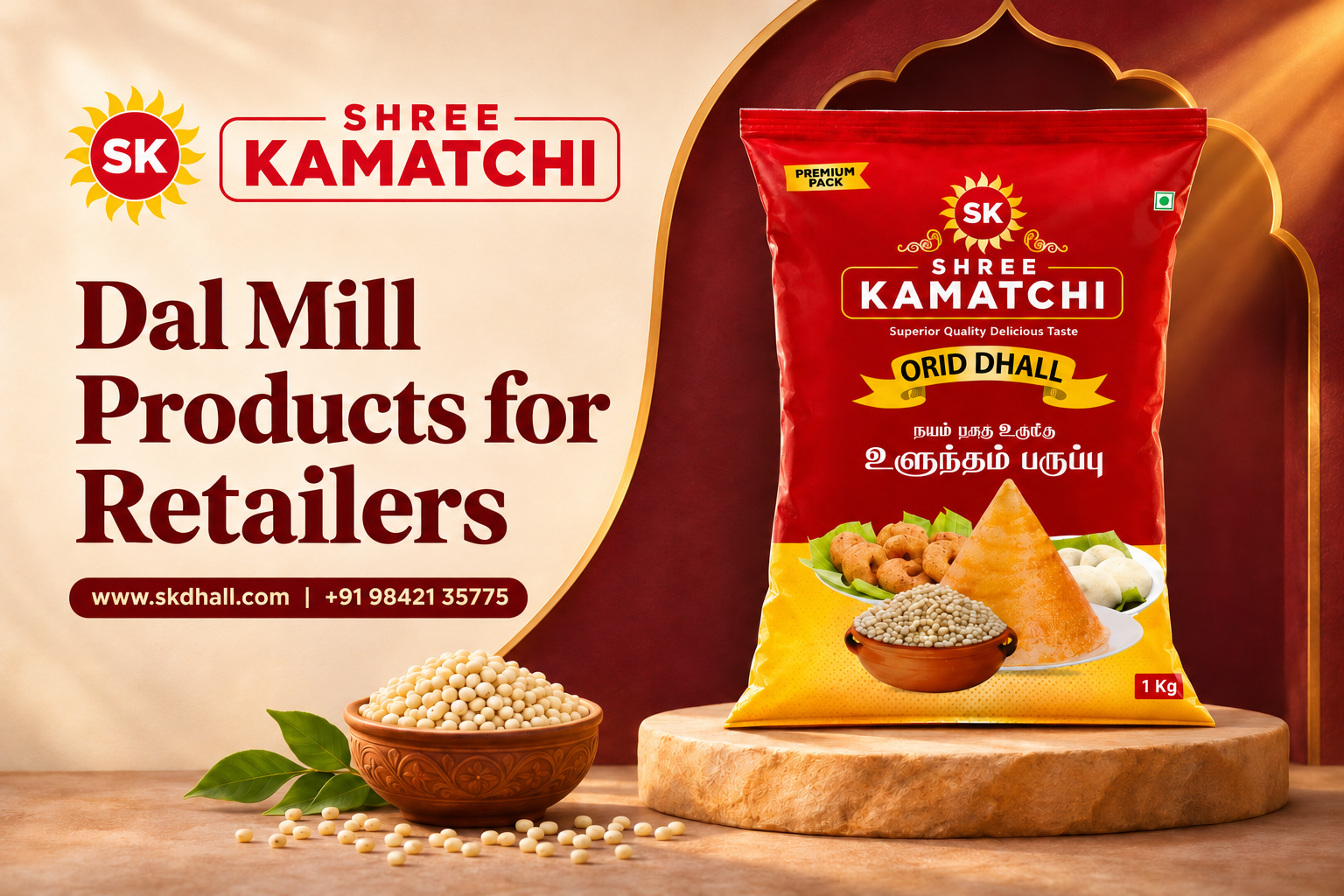
For example, SK Dhall offers Orid Dhall in 1 kg, 30 kg and 50 kg packaging options to meet different purchasing requirements.
Retailers should consider customer demand, packaging costs and available storage space before finalising their product sizes.
4. Effective Stock Planning for Retail Businesses
Proper inventory management helps retailers maintain product availability while controlling unnecessary storage expenses.
The following practices can improve stock planning:
- Monitor Sales: Review weekly and monthly sales to identify fast-moving products.
- Understand Seasonal Demand: Festival seasons, weddings and local consumption patterns may influence purchasing requirements.
- Maintain Reserve Stock: Keep additional quantities of popular varieties to manage unexpected demand.
- Follow FIFO: Use the First In, First Out method to sell older stock before newer purchases.
- Plan Reorders: Consider supplier delivery schedules and purchasing lead times to avoid stock shortages.
Maintaining a simple inventory register or using billing software can help retailers track purchases, sales and available quantities.
5. Maintaining Dal Quality During Storage
Appropriate storage practices help preserve the quality of pulses and protect retail inventory.
Retailers should follow these precautions:
- Maintain pulses in a hygienic storage space with proper air circulation.
- Protect packaged products from damp conditions, excess heat and prolonged exposure to sunlight.
- Transfer opened packs into clean, food-grade, airtight containers.
- Keep products elevated from floors using suitable racks or pallets.
- Inspect stored inventory regularly for damaged packaging, insects or signs of moisture.
- Follow manufacturer recommendations for storage conditions and expiry dates.
These measures help retailers maintain product condition and minimise avoidable stock losses.
6. Choosing a Reliable Wholesale Dal Supplier
Choosing a dependable wholesale supplier is essential for maintaining product quality and ensuring a consistent supply for your retail business. Retailers should look beyond pricing and evaluate the supplier's ability to maintain consistent product standards.
Before placing an order, consider:
- Product quality and hygienic processing methods.
- Packaging choices that meet the purchasing needs of small retailers, supermarkets and bulk buyers.
- Competitive and transparent wholesale pricing.
- Consistent product availability.
- Reliable delivery arrangements.
- Clear communication and customer support.
A dependable supplier can make purchasing easier and support the long-term growth of a retail business.
Why Choose SK Dhall?
SK Dhall (Sree Kamatchi Dhall), based in Thoothukudi, Tamil Nadu, specialises in premium-quality Natu Orid Dhall. The company focuses on careful sourcing, hygienic cleaning and proper packaging to serve household customers, retailers and bulk buyers.
With 1 kg, 30 kg and 50 kg Orid Dhall packaging options, SK Dhall caters to different purchasing requirements. Its supply network serves customers across Tamil Nadu and Kerala.
Retailers and wholesale buyers looking for a dependable Orid Dhall supplier can explore SK Dhall's products and discuss their purchasing requirements directly with the company.
Frequently Asked Questions
1. What dal mill products should retailers stock?
Retailers can consider Urad Dal, Toor Dal, Moong Dal and Chana Dal according to local customer preferences and sales demand.
2. Which packaging sizes are suitable for dal retail businesses?
Packaging sizes such as 500 g and 1 kg are suitable for household customers, while 5 kg and larger packs serve bulk purchasers and commercial buyers.
3. How can retailers maintain the quality of stored pulses?
Store pulses in hygienic conditions, protect them from moisture and insects, inspect packaging regularly and follow proper stock rotation practices.
4. How should retailers choose a wholesale dal supplier?
Compare product quality, processing standards, packaging options, pricing, delivery arrangements and supply consistency before selecting a supplier.
5. What factors should retailers consider when planning dal inventory?
Consider previous sales, seasonal demand, customer preferences, storage capacity, supplier delivery schedules and product shelf life.
Conclusion
Choosing the right dal mill products, selecting suitable packaging and maintaining effective stock planning are essential for successful retail operations. By understanding customer requirements and working with dependable suppliers, retailers can improve inventory management and build lasting customer relationships.